

The Writing Process
My Writing Process, anyway, and the Rime of the Ancient Moleskine...

SO, EVERYBODY HAS A PROCESS FOR WRITING…
I recently had a couple of different writers’ Substack newsletters land in my mailbox, both describing their basic processes when it comes to writing. While I’ve addressed script formatting before, I don’t know if I’ve described my own process in getting there.
Personally, hearing how other writers work has value, mainly because I’m aware of my own inefficiency and am always looking to figure out how to be more productive, so asking writers who seem to be more efficient and prolific how they do things seems natural. However, over the years I’ve come to the conclusion that it’s probably about individual wiring as much as anything. I’ve asked prolific, time efficient writers how they work, and I think the efficiency is generally baked into their DNA, and their working methods are developed to maximize that.
So, really, the best you can hope to do is maximize the efficiency of your own natural inclinations. Beating yourself up over not having the same work habits as Writer X is counter-productive. I mean, it’s an old cliche, but being the best “you” that you can be is about all you can hope for.
What I’m presenting here is me at my most efficient, more or less. The reality is I tend to do most of my writing in bursts. The actual physical writing of a script might take a day, often prompted by deadlines. I’ve always worked that way, back to school, and have realized that to some extent it’s a product of my ADD. I’ve never wanted to work that way, but the fact that my work has generally been positively received when I do pull an all-nighter has at times given me undeserved confidence in what I’m fully aware is not the best of methods.
So, let’s say I’m working on a script for one of my current Ignition books, largely plotted by myself or by myself and my collaborator (Mack Chater in the case of BLOODLAND, as we developed the book together), with input from Ignition’s editorial team (Maggie Howell and Nora Onstein, working under Jamie Rich). At that point, I’m generally left to my own devices, and begin building a story.
I’ll have a rough idea of where I want the story to go, and will zero in on one or two Big Scenes or Set Pieces involving the characters. These are designed to do several things: Engage the reader; inform the characters; push the plot along; and sometimes conclude a character’s arc.
Ideally, I’ll jot down numbers for each script page in a notebook, and then kind of plug in a few scenes I have in mind, trying to eyeball the pacing, and the rise and fall of the story. I think of each issue in a series as an individual chapter, and intuitively just feel out the way story elements balance and come together. And I’ll try to have a specific ending in mind.
For this piece, I dug through my old Moleskines (side note: these days I only use Moleskines when they’re gifted to me, as there are so many cheaper alternatives for notebooks), and pulled out a couple of random examples of how circumstances have actually played out over the years.
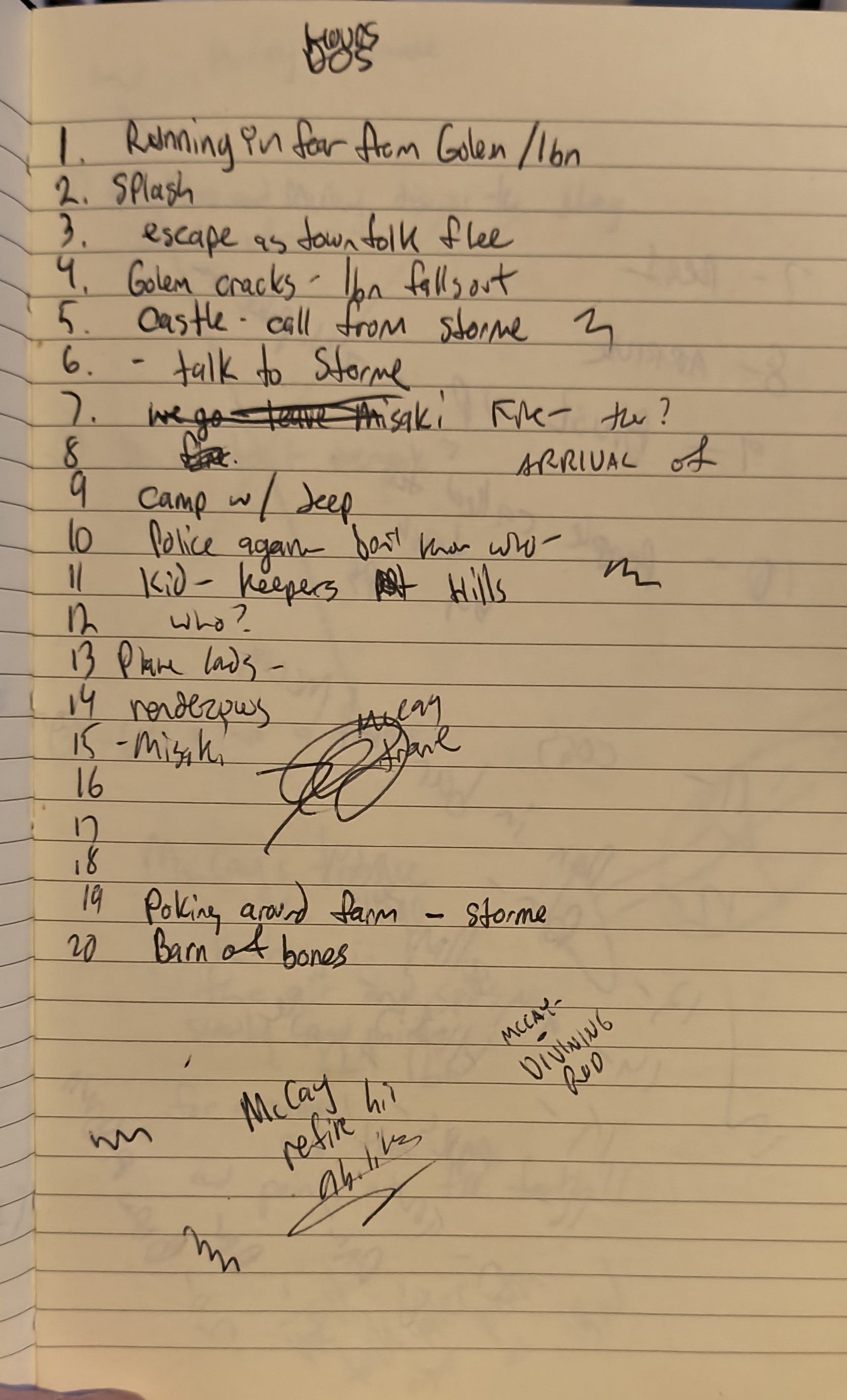
This is my “outline” for a first issue of something that was drawn (and colored), but never published, but it’s about as good as it gets for me when it comes to outlining on a normal script:
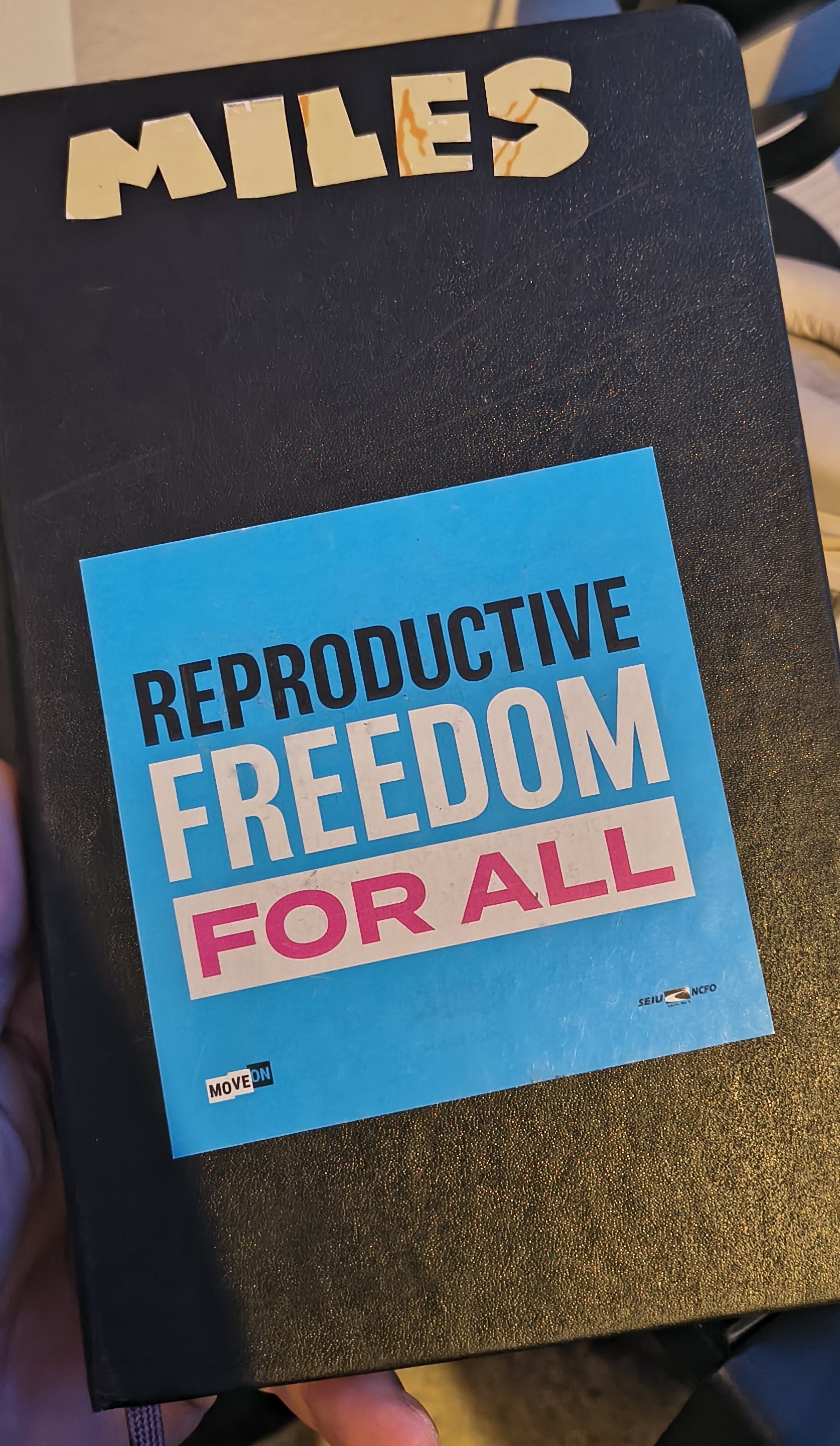
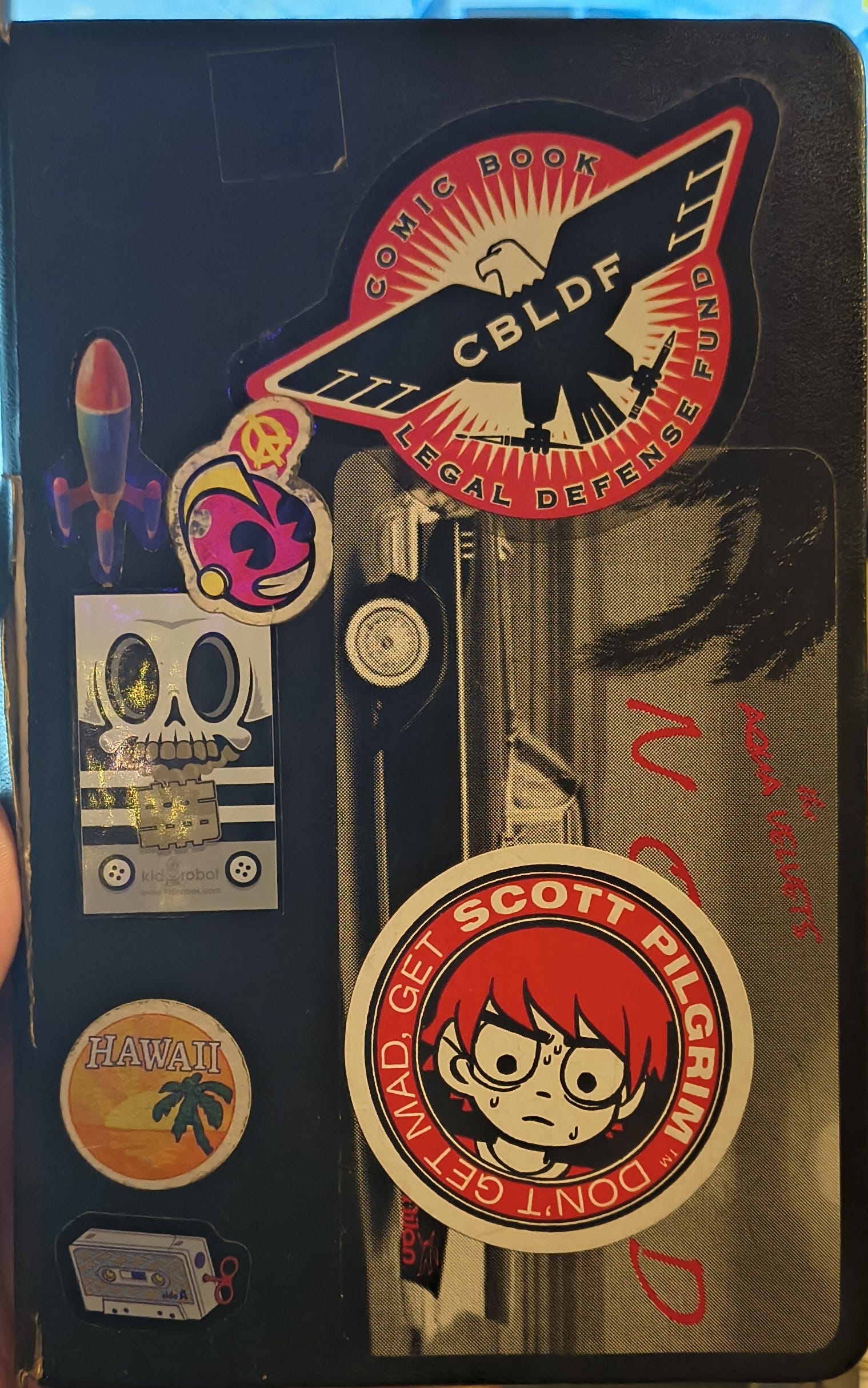
While digging around I found a notebook I’d planned to dedicate to MILES TO GO, a book artist Stephen Molnar and I did for Aftershock during the pandemic. (I also apply stickers to my notebooks, laptops and tablets like a fourth grade girl) As you can see, I cut out some letters for the cover, which no doubt took time I could have spent writing. Wasting time is not a skill I’m proud of, but one I’ve honed to an art.
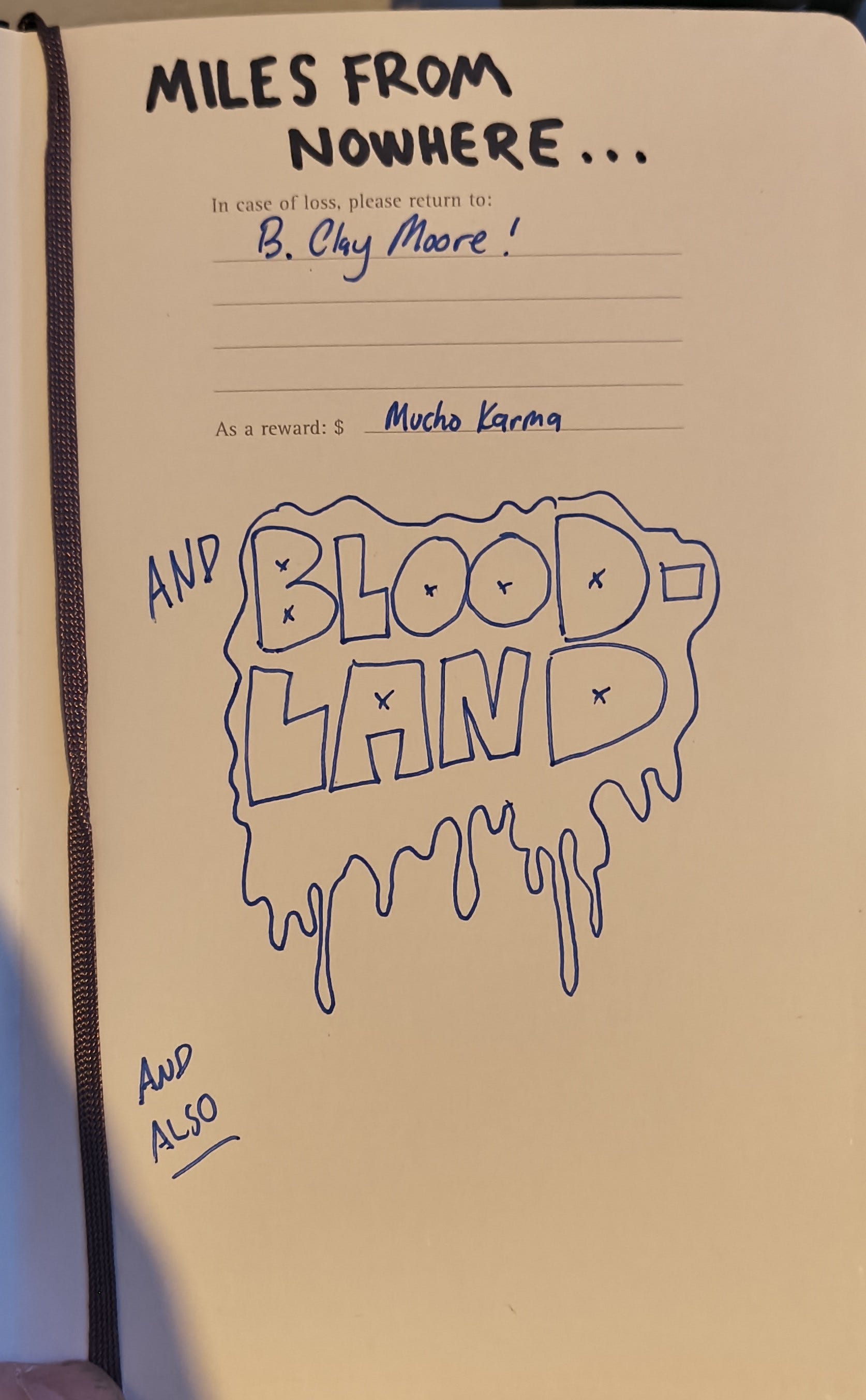
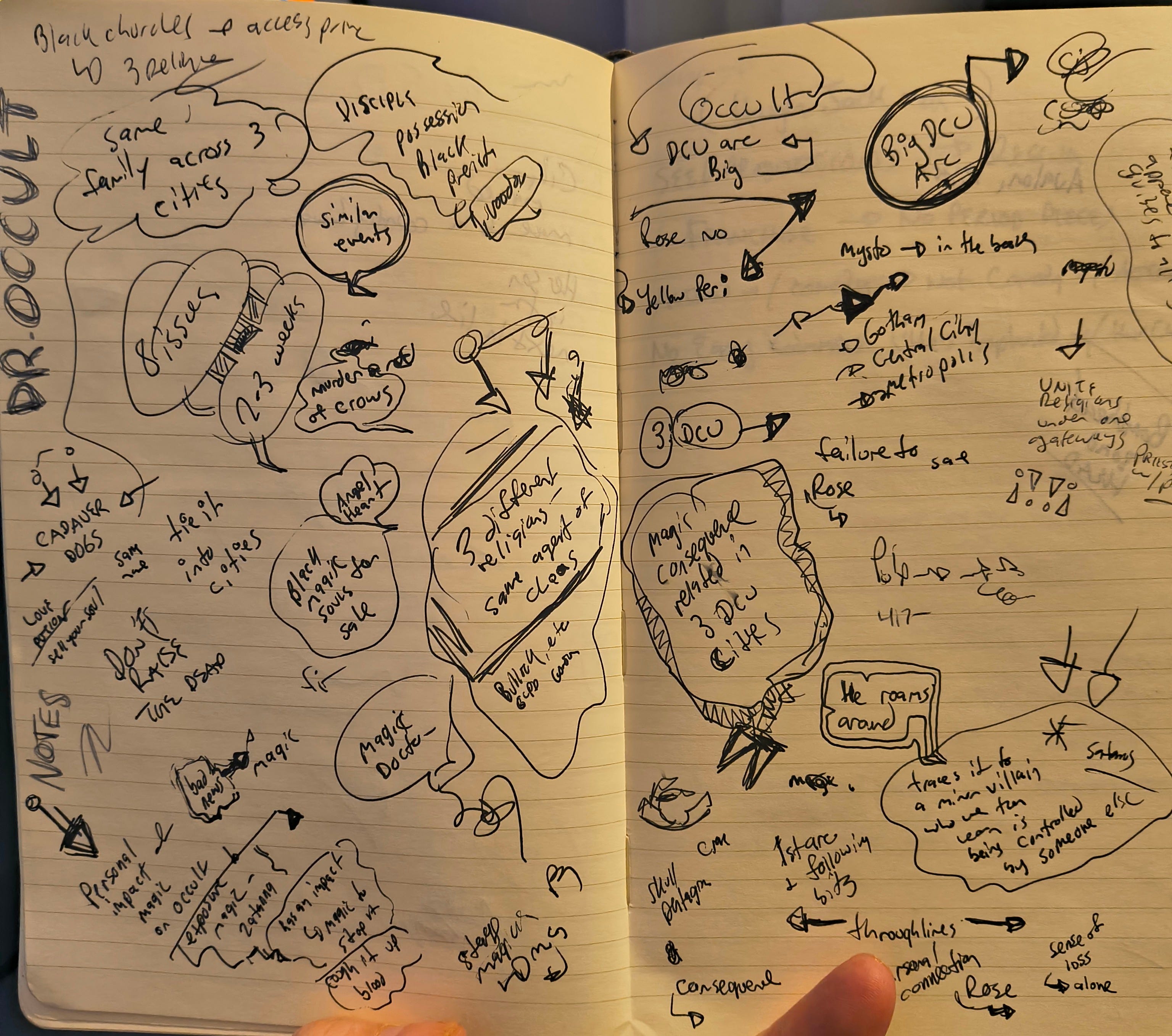
I was surprised to pop open the notebook and see I’d also piggybacked BLOODLAND notes here. This would have been when Mack and I were developing the concept, and long before it landed at Ignition. Also, the original title of MILES TO GO was MILES FROM NOWHERE, inspired by an old Cat Stevens song. As often happens, there were concerns over the title being used elsewhere, so it became MILES TO GO.
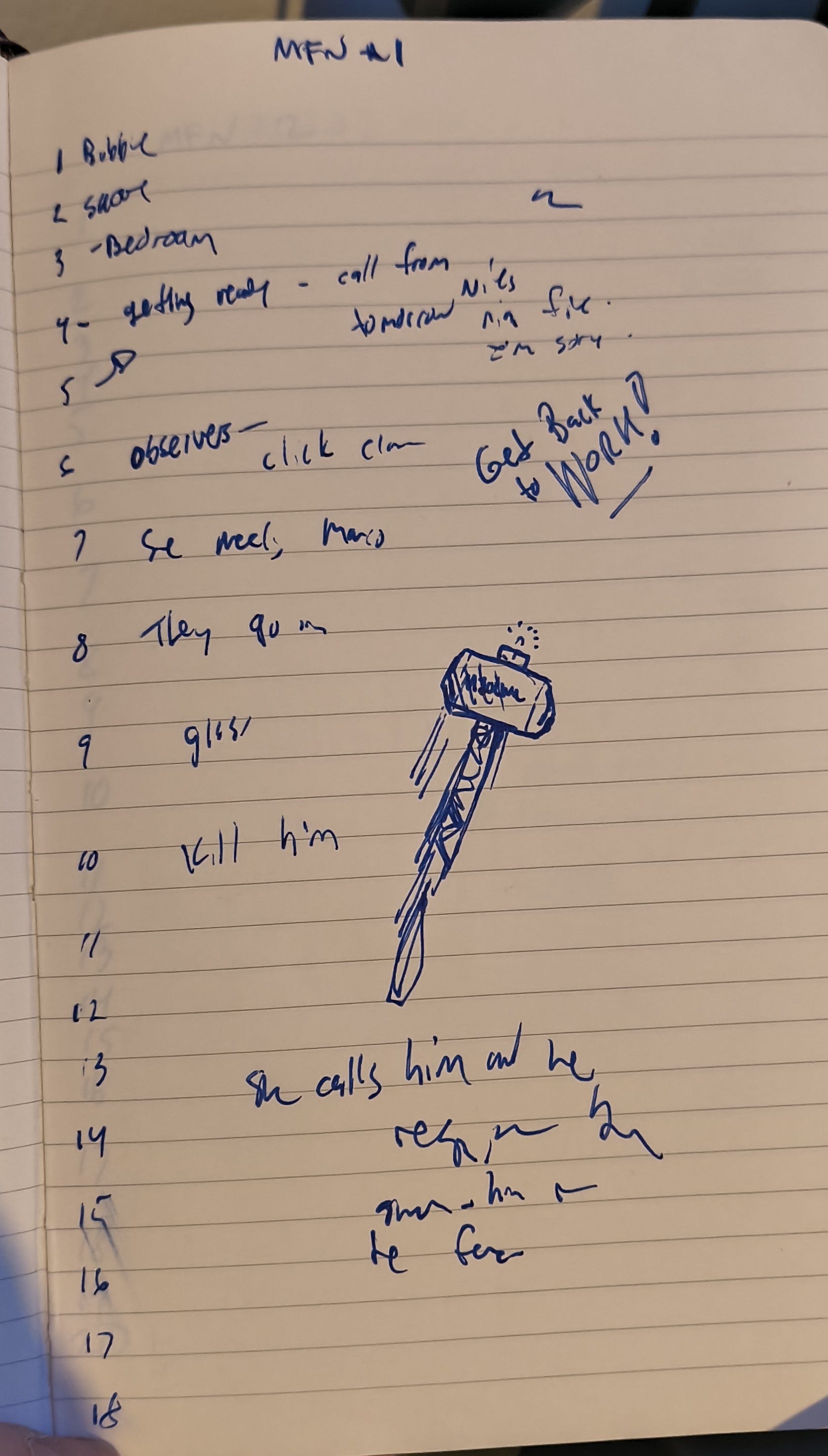
Anyway, this is my initial “outline” for the first issue of MILES TO GO. As you can see, it’s a stretch calling it an outline. Also, there’s Thor’s hammer, for some reason. Having said that, I honestly believe MILES TO GO #1 is one of the best first issues I’ve ever written. A detailed outline isn’t necessary to build a story. Rather, it tends to serve as a reminder for points I know I want to hit. I’ll also often go back and drop in lines of dialogue that pop into my head, since there are times I’ll “hear” a scene and build around dialogue as well as action.
Following this initial crazy rough outline, I ended up making some notes about an opening I envisioned, and as ideas tumbled in place, I did probably as tight an outline as I’ve ever done, which also follows.
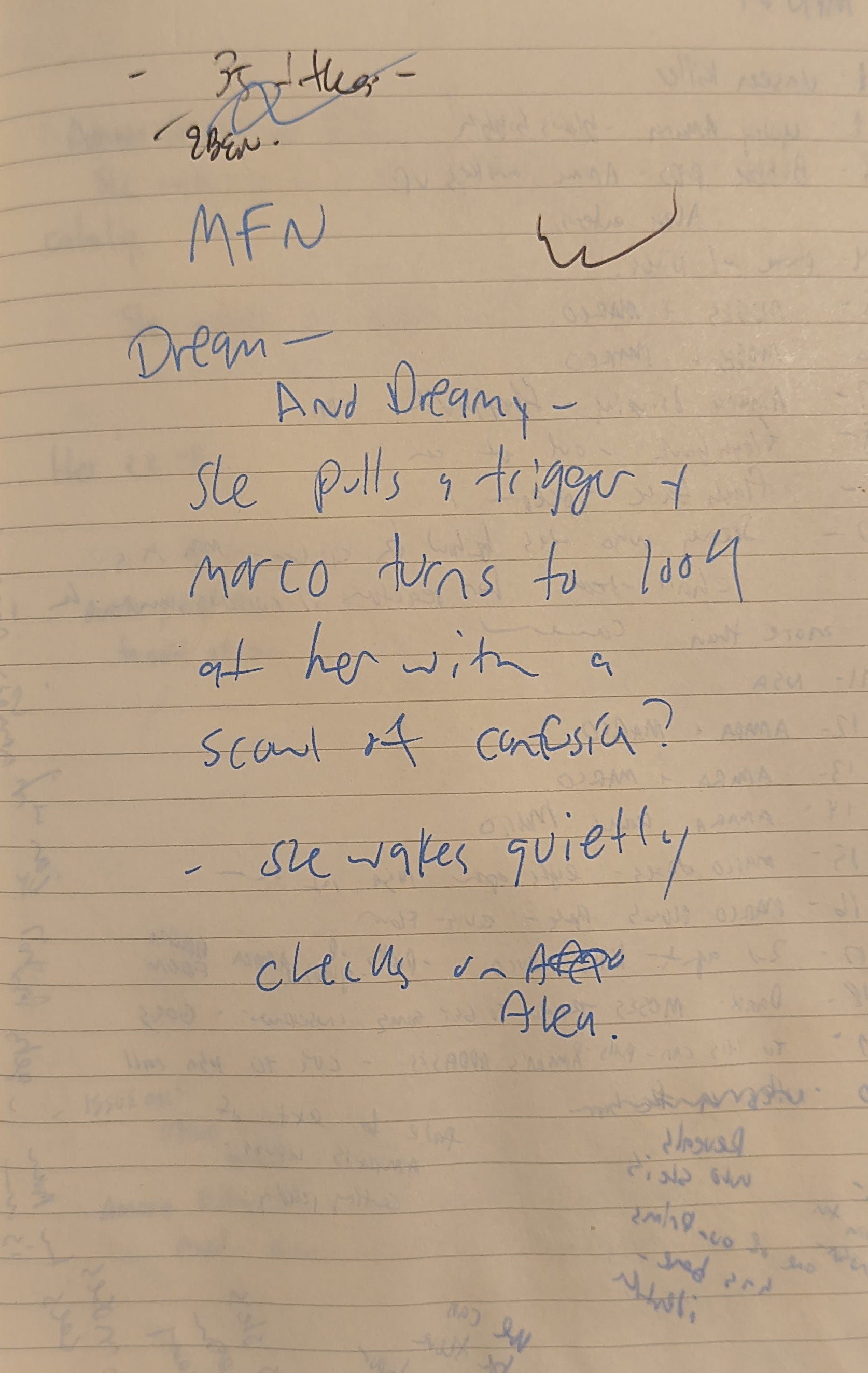
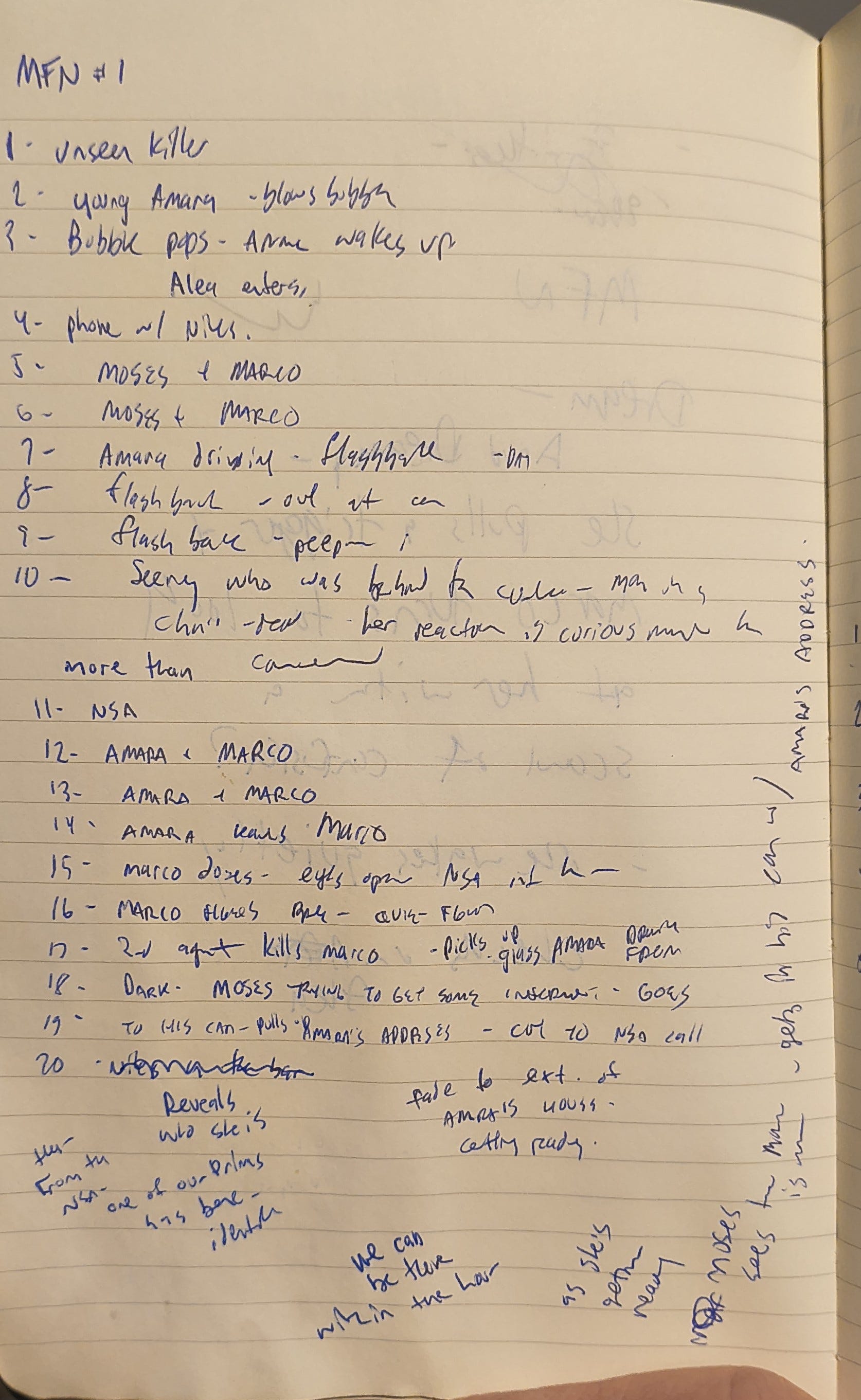
You’ll note that even that outline is sparse on details. It’s not tight, it’s just full. There are placeholder notes to give me the option of adding scenes, or of dialing scenes back. I scripted the first issue from this outline. Once I turned it into Aftershock editorial (at the time Mike Marts and Christina Harrington), the only real note I got back suggested I consider more of a cliffhanger on which to end the issue. To me, that’s good editing. One note that prompts me to make things better. And they were right, and adding a killer cliffhanger is what, to me, made the issue complete, and work as well as it did.
The general lack of a tight outline serves to highlight where most of the “real” work is done for me, and why it’s possible to sit down and chop out a story in under a day without a written series of specific guideposts. Once I have a general idea of what I want the story to be, I turn it over and around in my head, sometimes for days, sometimes longer. By the time I’m doing the actual writing, I generally only have a few gaps left to fill in. Even when I outline as above, line by line, I would rather leave a little breathing room than plot it so tightly that I can’t lend more or less weight to one scene or another.
My plotting works a lot like my method for pitching a book. I have a general idea of where I want it to go, and trust that it will all come together if I relax and just think it over for a while. And that almost always happens. Having faith in solutions is generally the best way to find them. I find that to be true in life, too.
With more time at hand, and in an ideal situation, I’ll start a script with time to spare, and not a day before I need to turn it in. When that happens, I’ll usually get a few pages written, and might script out a few scenes and figure out how to write around them later. Then I’ll put it aside for a couple of days, and usually sit down to finish it in a second go round.
I also usually run with my first draft. I’m not big on revisions, although there are times I’ve turned in a script that I know is a mess if I have enough lead time before an artist will get to it. The foundation in place, I’ll take time after stepping away to fine tune it and make it work. One thing I’ve found that is absolutely true is that with distance, it’s much easier to judge whether or not things you thought you were married to are really all that necessary. I always try to keep in mind that readers will never miss a thing they never knew existed. So chop away and let it go.
Basically, much of what I do is based on intuition more than method, leaning on what I’ve internalized as a reader and writer. I’ve come to realize there are other writers out there who do things the same way, and if it works for you, it works. Some writers nail everything down, outline every detail, and work from a concrete skeleton. I do not.
I don’t think there’s any writing advice that’s 100% correct, so presenting this stuff is an attempt to demonstrate that “how to” pieces best serve as fodder to use when kicking the method that works best for you.
And, if you’re a time efficient wizard with a laser focus on work, go ask Cullen Bunn how he does what he does.
DISPATCH and BLOODLAND!
A reminder to keep your eyes peeled for BLOODLAND #4, and please badger your shops to stock up on DISPATCHED #1, which hits shelves in June, and look for the DISPATCHED preview ashcan!
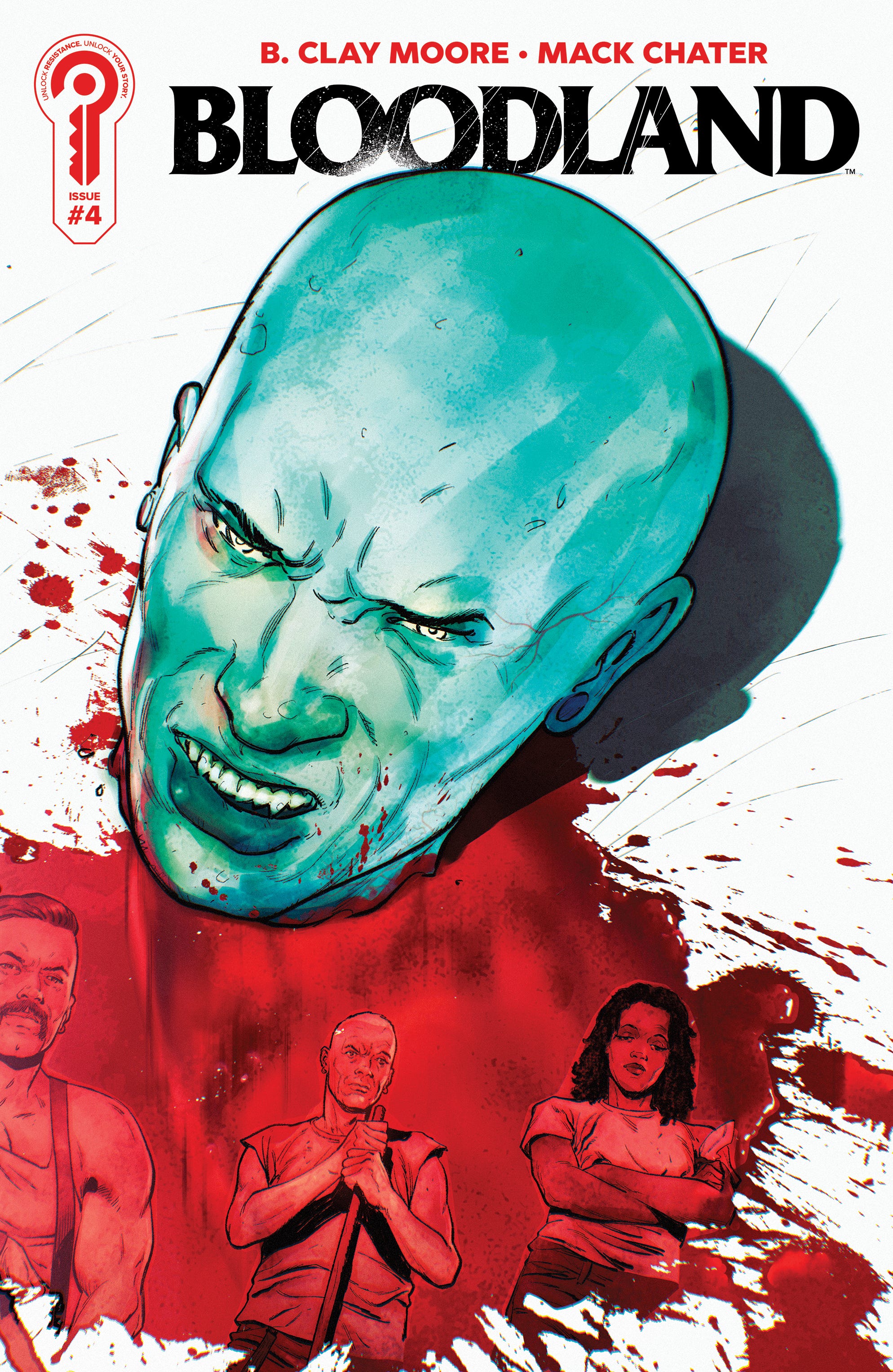
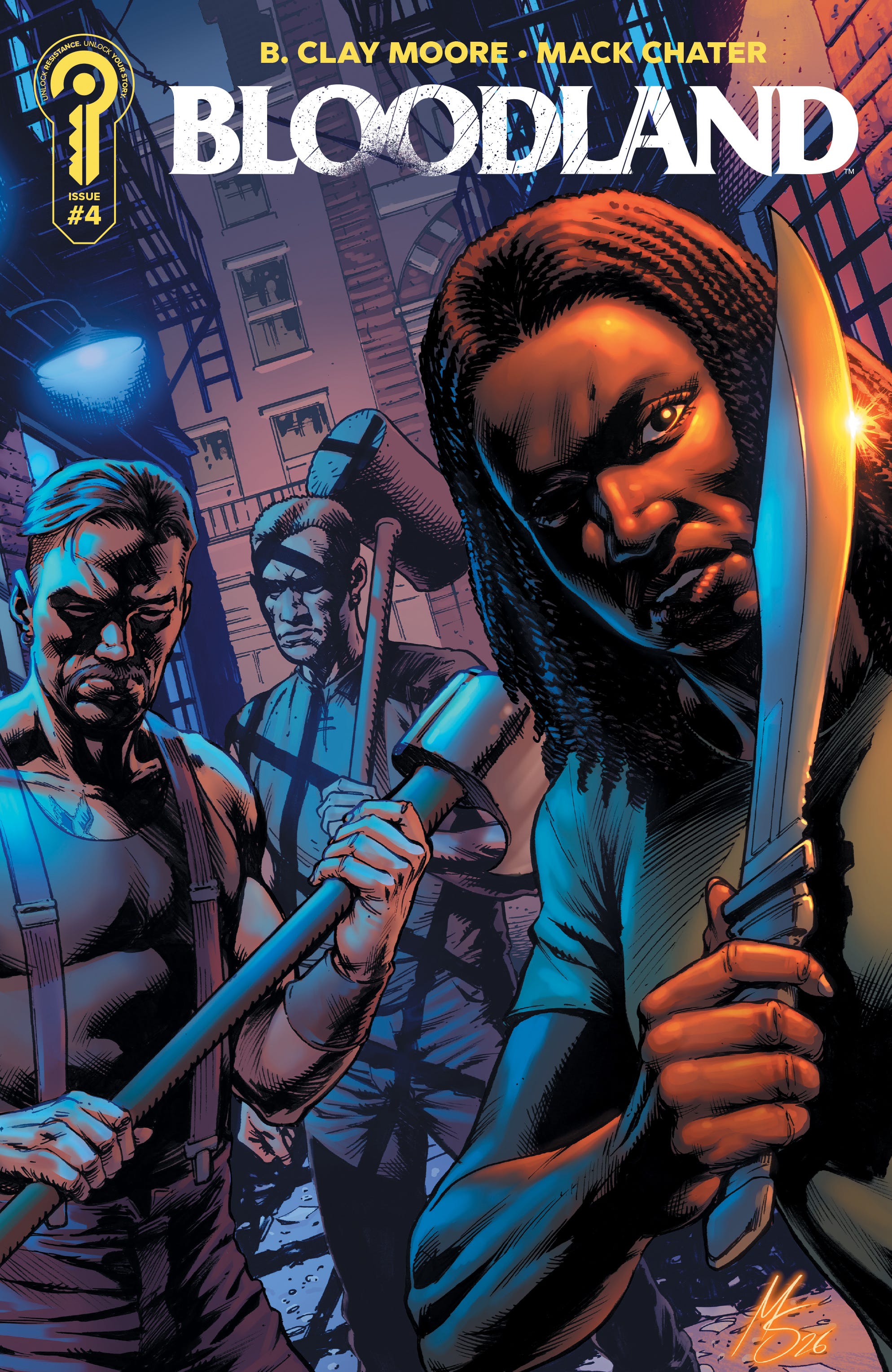
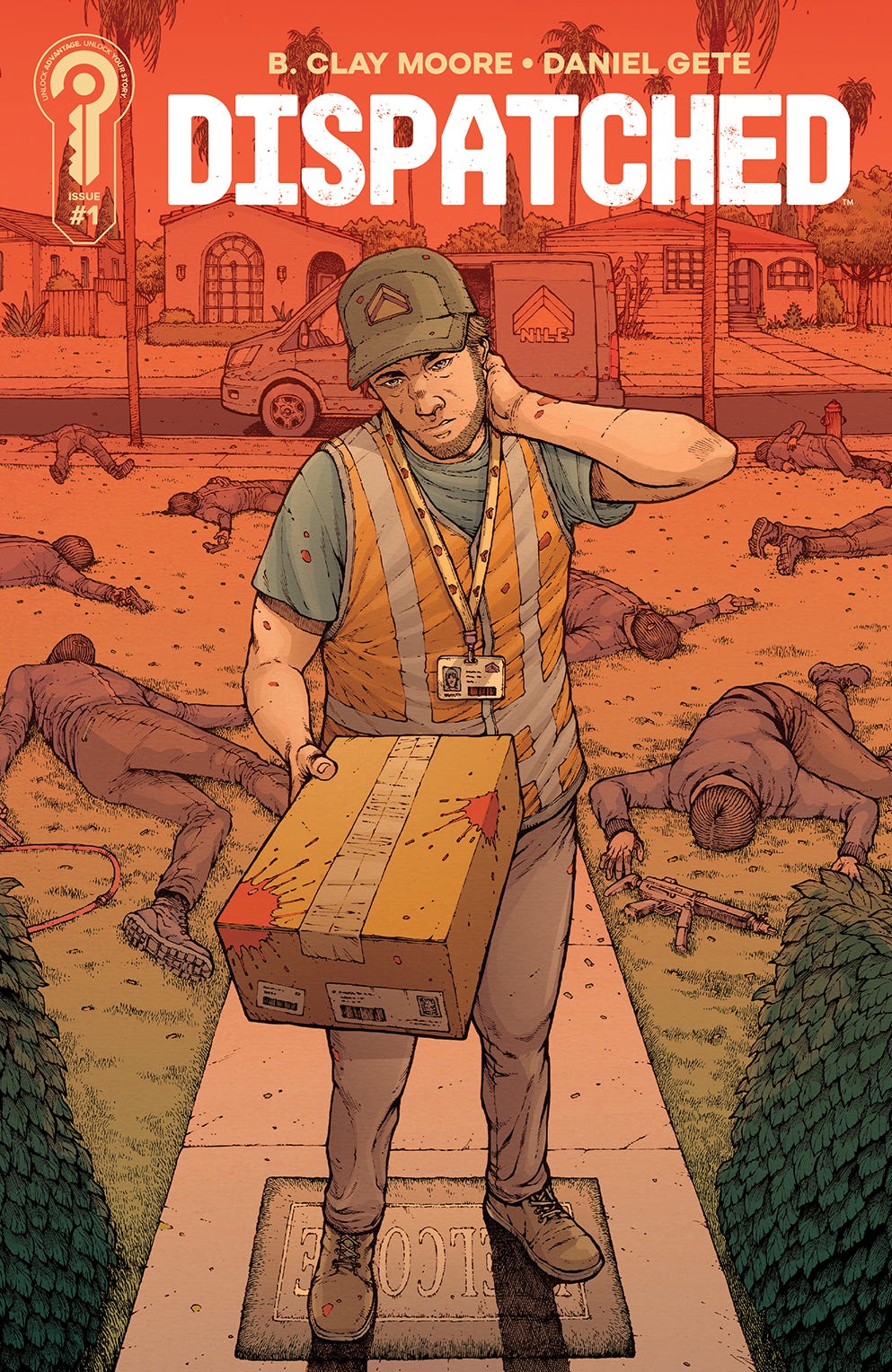
More info (and copies available!) at the Ignition Press website, of course.
Mahalo
-BCM